
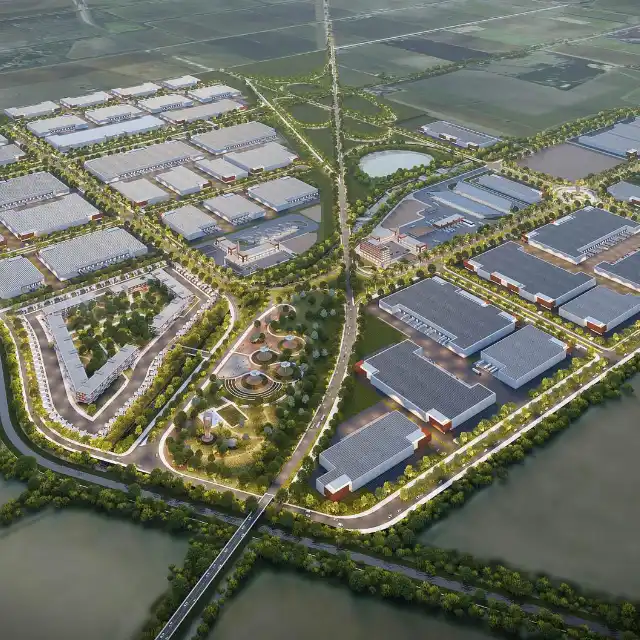
Choosing where to locate an industrial plant is one of the most important decisions for a company seeking to grow, expand its production capacity, or bring its operations closer to new markets. Location influences logistics costs, talent availability, operational continuity, delivery times, and the investment required to launch the project.
However, finding an available plot of land or a building that seems suitable does not necessarily mean that you have found the best location.
A sound decision requires analyzing the site from a holistic perspective: what the operation needs, what infrastructure exists, how much it will cost to enable the property, and how viable it will be to keep it running in the long term.
In Mexico, where different industrial corridors, labor markets, infrastructure conditions and access to national and international markets coexist, the selection of the site must respond to the real needs of the business.
Why is the location of an industrial plant a strategic decision?
Location matters far more than the price of the land. A facility can have an attractive real estate cost and still generate high expenses if it is located far from suppliers, customers, transportation routes, or essential services.
For example, a manufacturing company that relies on frequent component deliveries needs to assess proximity to its suppliers and the reliability of the routes. In contrast, a distribution center might prioritize access to large consumer markets, road connectivity, and the capacity to receive and ship goods.
An energy-intensive operation will also have different criteria than a company that primarily needs storage space.
Therefore, the right question is not only where there is available space, but what location allows the operation to function best.
Costs that don't always appear in the property price
Before making a decision, it is advisable to identify the costs that may arise after acquiring or leasing a space:
- Infrastructure and service upgrades.
- Access works, yards, roads and maneuvering areas.
- Power and water connections or extensions.
- Staff transportation and worker availability.
- Transfers of raw materials and finished products.
- Permits, studies and technical procedures.
- Time required to enable the site.
- Costs arising from future expansions.
The analysis should consider the total cost of installing and operating the plant, not just the initial price of the land or the monthly rent.
The seven factors for evaluating an industrial location
1. Closeness to customers, suppliers and markets
The first step is to map the main origin and destination points of the operation. This includes suppliers, related plants, distribution centers, customers, and export points, where applicable.
Measuring distances in kilometers is not enough. It's also necessary to estimate actual travel times, road conditions, restrictions for heavy transport, and variations in traffic schedules.
A more remote location can be competitive if it offers better connections, less congestion, or more direct access to the routes the company uses.
2. Logistics connectivity
Connectivity should be evaluated according to the type of operation.
For a manufacturing plant, priority factors may include access for freight transport, proximity to strategic suppliers, and ease of moving finished product.
For a distribution center, the entry and exit routes, the circulation of tractor-trailers, the connection times with the markets served, and the possibility of performing maneuvers without creating bottlenecks must be reviewed.
It is also advisable to analyze rail, airport or port connectivity when it forms part of the logistics strategy.
3. Talent availability
Staff availability is a factor that can directly influence the productivity and continuity of an operation.
The evaluation should consider the availability of technicians, operators, engineers, and administrative staff, based on the company's needs. Competition for talent in the area, accessibility to public transportation, and employee commute times are also important factors.
A location may offer adequate real estate infrastructure, but present difficulties in attracting or retaining the required staff.
Therefore, job analysis should be part of the site selection process from the beginning.
4. Energy, water and industrial services
The availability of services must be validated with technical information, not just with commercial claims.
In electrical matters, it is important to know the estimated demand, the available capacity, the connection requirements, the response times and the backup needs of the operation.
In water, the required volume, the source of supply, the quality, the treatment, the discharge, and the applicable permits must be analyzed.
Depending on the project, natural gas, telecommunications, fire protection systems, and wastewater treatment infrastructure may also be essential.
The question is not only whether the service exists in the area, but whether it can be supplied under the conditions, quantities, and times required by the plant.
5. Land use, permits and property conditions
Before committing resources, it is necessary to check that the land is compatible with the activity that is intended to be developed.
The review should consider applicable land use, urban planning restrictions, environmental conditions, geotechnical characteristics, access, and possible limitations for construction.
It is also advisable to check easements, rights of way, encumbrances, drainage conditions and any element that may limit the usable surface area.
A property that seems sufficient in terms of square meters may not offer the required usable area once setbacks, roads, yards, maneuvering areas and regulatory restrictions are considered.
6. Total cost and feasibility of the investment
The price of the land should be compared with the cost of preparing the site and putting the facility into operation.
An inexpensive plot of land may require significant earthworks, retaining walls, additional infrastructure, or utility connections that increase the initial investment.
In an existing building, the cost of adaptation can be decisive if the layout, height, floors, electrical capacity or security systems do not meet the needs of the operation.
The financial assessment should consider both initial outlays and recurring costs and the risks of delay.
7. Expansion capacity
A suitable location today must also offer alternatives for future growth.
The company may need more production lines, additional storage, yards, parking lots, or specialized infrastructure. If the site doesn't allow for expansion, growth could necessitate another move or operating in separate facilities.
It is advisable to assess the available surface area, construction restrictions, the possibility of acquiring adjacent land, and the capacity of services to meet increased demand.
How to compare locations: a decision matrix
A weighted matrix helps compare alternatives using consistent criteria. The team must define the importance of each factor according to the operation and assign a rating to each location.
The following matrix is a working example, not a universal weighting.
| Criterion | Reference weight |
|---|---|
| Logistics and connectivity | 20% |
| Energy, water and services | 20% |
| Talent and the labor market | 15% |
| Total project cost | 15% |
| Permits and viability of the property | 15% |
| Closeness to customers and suppliers | 10% |
| Expansion potential | 5% |
| Total | 100% |
Each location can be rated, for example, from 1 to 5, where 1 represents an unfavorable condition and 5 a very favorable condition.
To obtain the weighted result, the rating of each criterion is multiplied by its weight and then the results are added together.
The matrix facilitates comparison, but it should not be used to mask critical risks. A location with an excellent overall rating can be discarded if it lacks a viable solution for electricity supply, land use, or an essential permit.
Therefore, it is advisable to separate the criteria that can offset each other from those that function as mandatory conditions.
Which industrial corridor is best for each company?
There is no single corridor that is the best option for all projects. The decision depends on the target market, the supply chain, labor, infrastructure, and costs.
The State of Mexico may be attractive for operations that need to serve the metropolitan market and connect to a broad logistics network. Puebla may be relevant for certain manufacturing activities and supply chains. The Bajío region brings together diverse industrial markets and connections that can be advantageous for manufacturing and distribution operations.
These references are starting points, not automatic recommendations. The suitability of each area should be verified at the municipal, industrial park, and specific property levels.
Even within the same corridor, there can be significant differences in service availability, travel times, terrain restrictions, and development costs.
When is a Built-to-Suit project appropriate?
When the available facilities do not meet the requirements of a company, a Built-to-Suit project allows the development of a building designed around the needs of the operation.
This approach can be especially useful when particular dimensions, specialized yards, specific floor characteristics, electrical capacity, security systems, or a layout adapted to production and logistics processes are required.
Site selection remains critical. Designing a custom-built facility does not eliminate the risks of a poorly assessed location; on the contrary, it makes validating the land, infrastructure, and feasibility even more important before proceeding.
A comprehensive process can combine site search, technical evaluation, financial planning, and property development into a coordinated strategy.
Checklist before choosing the site
Before making a decision, confirm that the team has reviewed:
- Surface and distribution requirements.
- Access and logistics times.
- Talent availability.
- Electrical supply capacity and conditions.
- Water supply and wastewater management.
- Land use and applicable permits.
- Geotechnical and topographic conditions.
- Estimated investment to enable the site.
- Relevant operating costs.
- Potential for future growth.
- Critical risks and mitigation alternatives.
Conclusion: Choose wisely before investing
The location of an industrial plant should be evaluated as a business decision, not as an isolated real estate purchase.
A good selection combines connectivity, services, talent, regulatory feasibility, total cost, and scalability. The decision matrix allows you to prioritize factors, compare alternatives, and document why one location best meets the company's objectives.
At MARFA BTS, site selection is part of a comprehensive vision for the industrial project: understanding the operation, identifying the necessary conditions, and coordinating the next steps to turn an expansion need into a viable facility.
Are you evaluating a new plant or distribution center in Mexico? The MARFA BTS team can help you structure your search criteria and evaluate the conditions that the location must meet for your project.
Discover our solutions Locate, Manage, Develop and Integrate Visit builttosuit.mx and start by defining what your operation really needs.