
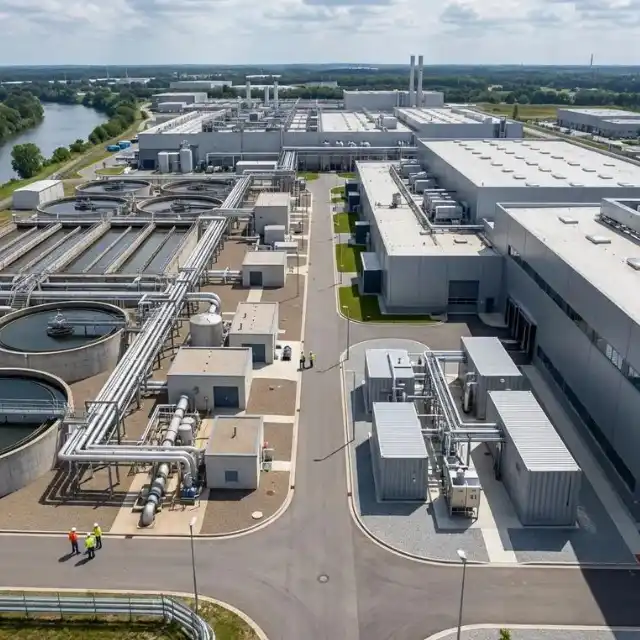
A plot of land may seem suitable for developing an industrial building and yet present restrictions that completely change the viability of the project.
Lack of electrical capacity, insufficient water supply, complex geotechnical conditions, or pending authorization may generate additional investments and affect the start date of operations.
These risks are not always apparent during an initial visit. Therefore, before committing to a significant investment, it is necessary to conduct a feasibility assessment to understand the actual conditions of the property.
Feasibility is not about gathering documents to complete a formality. Its purpose is to verify that the project can be developed and operated under reasonable technical, regulatory, and economic conditions.
What does it mean to assess the feasibility of an industrial site?
Feasibility is the process by which it is reviewed whether a property meets the necessary conditions for the intended use and what additional work, authorizations or investments might be necessary.
The review should connect the requirements of the future installation with the characteristics of the site.
For example, a project that uses water primarily for sanitation will have different needs than a plant that incorporates washing, cooling, or treatment processes. Similarly, a facility with energy-intensive machinery requires a different electrical assessment than a conventional warehouse.
Therefore, feasibility must start from the project requirements and verify them against the conditions of the land and its surroundings.
Water: availability, quality and management
Water can be a determining factor for numerous industrial operations. However, confirming the existence of a nearby network does not guarantee sufficient capacity to supply the facility.
The assessment should identify the estimated demand, supply conditions, required quality, necessary storage, and treatment alternatives.
1. Define actual consumption
The first step is to calculate how much water the operation will use and how the consumption will be distributed throughout the day.
Sanitary uses, cleaning, cooling, production processes, auxiliary services and any specialized application must be distinguished.
It is also important to identify what part of consumption may vary with the volume of production and what part remains relatively stable.
An estimate based solely on the size of the vessel may be insufficient if the process has specific needs.
2. Verify the source and supply conditions
It is necessary to confirm what the source of supply will be and under what conditions it can be used.
Depending on the case, this may involve reviewing network availability, provider commitments, connection conditions, authorized volumes, and applicable legal requirements.
The proximity of an existing pipeline or infrastructure should not be assumed to guarantee the required supply.
When the project includes its own source, the corresponding technical and legal feasibility needs to be reviewed before incorporating it as a solution in the design.
3. Evaluate the discharge and treatment
The water used may require treatment before discharge. The conditions depend on the process, the composition of the effluent, the discharge point, and applicable regulations.
The assessment should consider flow rates, quality, pretreatment, sludge management, and other needs that correspond to the activity.
It should also be checked whether the available infrastructure can receive the download and under what conditions.
Ignoring this component may create the need to incorporate equipment or facilities that were not included in the initial investment.
4. Consider water efficiency
Planning can identify opportunities to reduce consumption, reuse water where technically feasible, or separate streams with different characteristics.
These measures should be evaluated based on the operation, the required quality, and the associated costs. Not all technologies are appropriate for all processes.
The goal is to design a realistic solution that meets production needs and reduces supply and operational risks.
Electrical energy: available capacity and connection conditions
Electrical capacity is another aspect that must be validated before proceeding with development.
A facility may require energy for machinery, lighting, air conditioning, compressors, material handling equipment, control systems, and auxiliary services.
Total demand, consumption profiles, and electrical quality and continuity requirements must be defined with the support of specialists.
What needs to be checked
Projected demand. The expected load must be calculated and reasonable growth of the operation considered.
Supply capacity. It is necessary to confirm the technical conditions to meet the demand on site.
Connection infrastructure. The project may require works, equipment or adaptations whose cost and schedule must be identified.
Business continuity. Some activities require backup, protection, or redundancy systems. The solution must be appropriate to the level of risk the company can tolerate.
Power quality. Certain equipment may require specific conditions to avoid interruptions or malfunctions.
Expansion. It is worth assessing whether the system will be able to handle future expansions or whether new investments will be needed.
It is not advisable to base a decision solely on a general statement that the park has power. The capacity, conditions, and confirmed scope must be documented.
Stormwater drainage and hydrological conditions
Rainwater can affect the building, the courtyards, the access points, and the continuity of operations.
The site review should consider its topography, runoff, low points, drainage capacity, and surrounding conditions.
When necessary, specialized studies will identify measures to channel or control rainwater and reduce the risk of flooding.
The consequences of altering the land surface must also be considered. The construction of roofs, patios, and roads changes how water infiltrates and drains.
The drainage system must be coordinated with the overall design and applicable requirements. It should not be treated as an element that can be resolved at the end of construction.
Soil, topography and construction conditions
The physical characteristics of the terrain influence the design of foundations, floors, and exterior works.
A geotechnical study allows you to understand the subsurface conditions and provides information for structural design. Depending on the site, it may be necessary to investigate fill, ground variations, bearing capacity, settlements, or other conditions.
Topography helps to establish levels, slopes, earthworks, and drainage solutions.
If these factors are unknown, the project may require additional work during construction, with effects on the budget and schedule.
The scope of the studies should be defined according to the characteristics of the site and the type of facility. A superficial review does not replace the technical investigations necessary for the design.
Land use and permits: what to check before moving forward
The fact that a property is located within an industrial zone does not mean that any activity is automatically authorized.
It is necessary to confirm that the intended use is compatible with the applicable provisions and to review which authorizations correspond to the development, construction and operation.
The specific list depends on the location, the type of activity, the scale of the project, and its impacts.
Topics that may require review include:
- Urban compatibility and land use.
- Building licenses or permits.
- Environmental requirements, where applicable.
- Waste and emissions management.
- Permits or conditions for the supply and use of water.
- Download authorizations.
- Civil protection and safety requirements.
- Access roads and related works.
- Special conditions applicable to certain activities.
This list is for guidance only. It does not replace a legal and technical review of the project, nor does it imply that all permits are required in every case.
The recommendation is to develop an authorization matrix that identifies the competent authority, the responsible party, the necessary documents, the departments, and the status of each procedure.
Environmental risks and site restrictions
In addition to the construction conditions, it is necessary to investigate whether there are environmental restrictions or precedents that may affect the development.
Depending on the case, the review may include terrain conditions, history of use, vegetation, bodies of water, restricted areas, and possible signs of contamination.
The need for additional studies should be determined according to the characteristics of the site and the intended use.
It is also advisable to review easements, rights of way, legal access, property boundaries and any condition that reduces the usable area.
The advertised surface area does not always match the surface area that can be used for construction, operation, and maneuvering.
How to build a feasibility risk matrix
A matrix allows technical findings to be converted into concrete decisions.
For each risk, it is advisable to document:
- Problem description.
- Available evidence.
- Probability of occurrence.
- Impact on cost, schedule and operation.
- Mitigation measures.
- Responsible for resolving it.
- Deadline for making a decision.
- Condition that must be met before continuing.
Risks can be classified as acceptable, mitigable, or critical. A critical risk is one that could prevent the project from succeeding or render it unfeasible if no reasonable solution exists.
The matrix must be updated as studies, quotes, and authorizations are obtained. The feasibility study is not a static document: it improves as uncertainty decreases.
Warning signs before committing to investment
It is worth pausing to investigate when:
- There is insufficient evidence of water or energy capacity.
- Access depends on unconfirmed works.
- The usable surface area is not clearly defined.
- Essential studies of the subsoil or drainage are lacking.
- The intended use is not confirmed.
- The authorizations are mentioned as a certainty, but they are not documented.
- The investment depends on an infrastructure whose execution has no responsible party or clear schedule.
- There are discrepancies between plans, documents, and physical conditions.
- Mitigation costs have not been incorporated into the budget.
An alert does not necessarily mean the property should be ruled out. It means additional information is needed to decide if the risk can be resolved and under what conditions.
Feasibility checklist before development
- Define the water and energy requirements.
- Confirm supply and connection conditions.
- Evaluate stormwater drainage and hydrological risk.
- Conduct relevant geotechnical and topographic studies.
- Check land use and restrictions.
- Identify applicable authorizations.
- Review waste discharge, treatment and handling.
- Confirm access and usable surface area.
- Estimate the cost of additional works and infrastructure.
- Develop a risk matrix.
- Define conditions that must be met before starting construction.
Conclusion: Feasibility must be verified before construction
A successful industrial development requires more than just available land and an architectural design. It needs sufficient services, compatible physical conditions, applicable permits, and a viable solution to the identified risks.
Validating water, energy, drainage, soil, and permits from the early stages allows for better-informed decisions and reduces the possibility of costly changes during construction.
MARFA BTS addresses industrial development from a comprehensive perspective, connecting the company's needs with the technical and execution conditions of the project.
Are you analyzing a plot of land for a new industrial facility? Contact MARFA BTS to identify the feasibility aspects that need to be reviewed before proceeding with development.
Discover our solutions at builttosuit.mx.